4flow Headquarter Berlin

Work today is no longer a static state. It is characterized by movement, exchange, periods of focus, and impromptu encounters. Spaces must accommodate, guide, and support this dynamic. Interior architecture thus becomes an active component of corporate culture, shaping processes, encouraging communication, and fostering a sense of identity.
With the renovation of the headquarters of the global consulting and software company 4flow on Hallerstraße in Berlin, brandherm + krumrey (bki) has created a working environment that consistently translates these requirements into spatial terms. Spread over five floors and covering around 4,000 square metres, the new office landscape leaves classic office structures behind, embracing work as a networked, dynamic process. The location is not only functional, but also emotionally significant: Hallerstraße is 4flow’s founding address – a historic place that has now been reinterpreted.
The project is based on a comprehensive master plan developed by bki 2022 for 4flow’s work environments across multiple locations. The aim was to make better use of existing space while creating a sustainable spatial concept that would support new working methods and be transferable to other locations. To this end, the Berlin headquarters was completely gutted, with the former partitioned offices and corridors making way for an open-plan working environment with clearly defined zones for different working-modes.
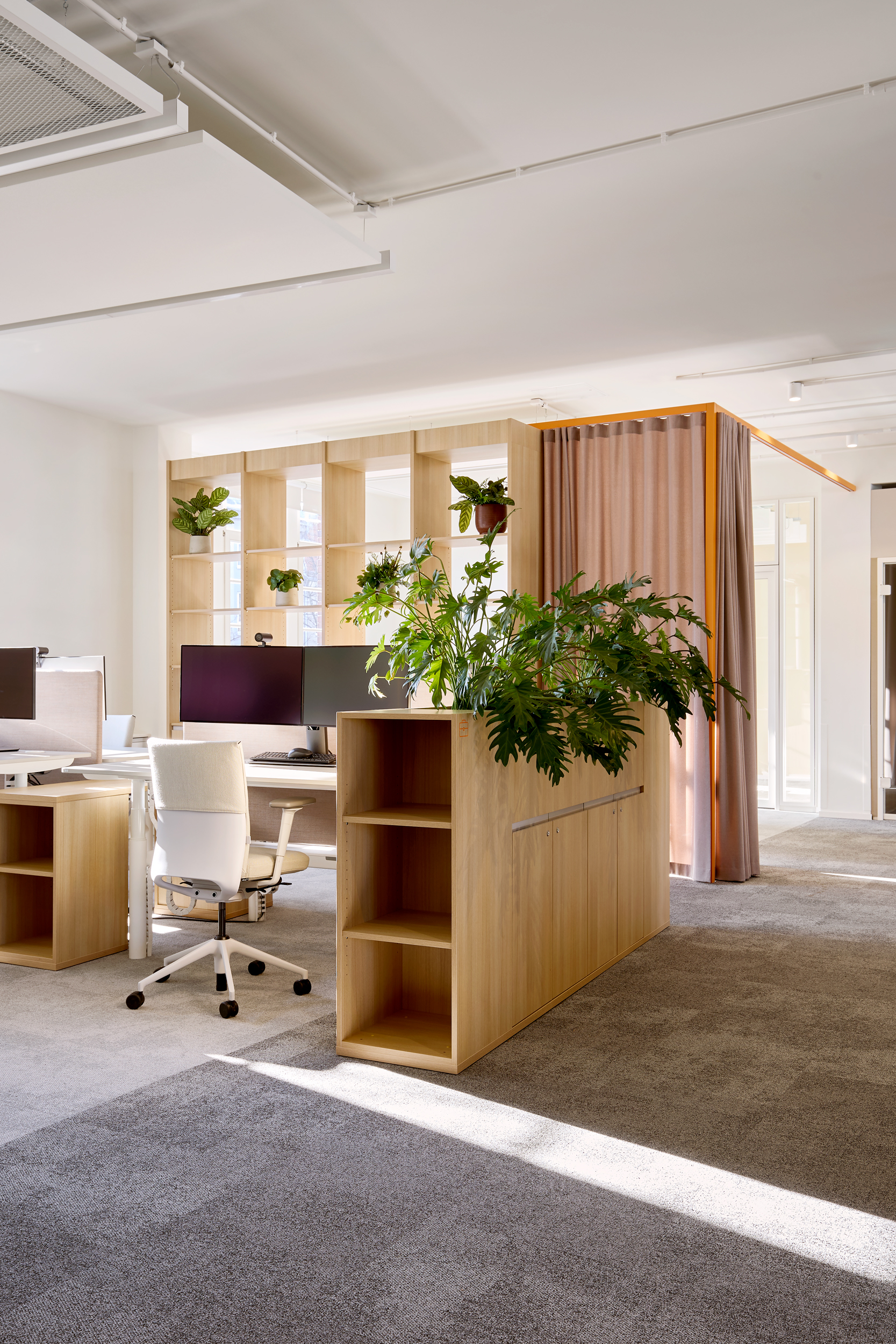
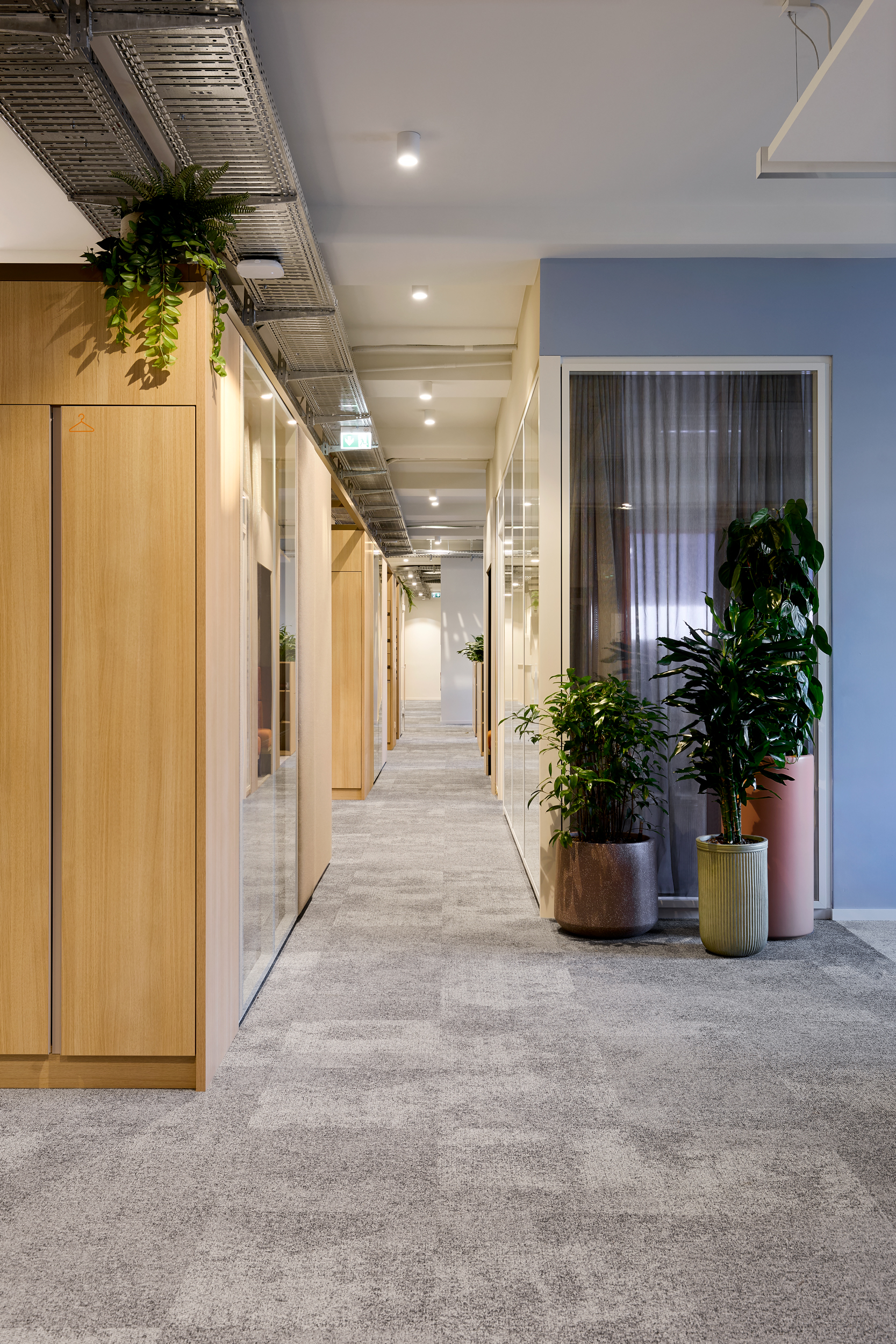
A key concern was to eliminate spontaneous conversations and exchanges from traditional workspaces without stifling them. Instead, meeting rooms and quiet areas were deliberately positioned close to workstations. This creates short distances between concentrated work, informal coordination and team meetings. Alongside open desk workstations, tunnel workstations provide protected zones for focused work, complemented by flexible workstations to accommodate various usage scenarios.
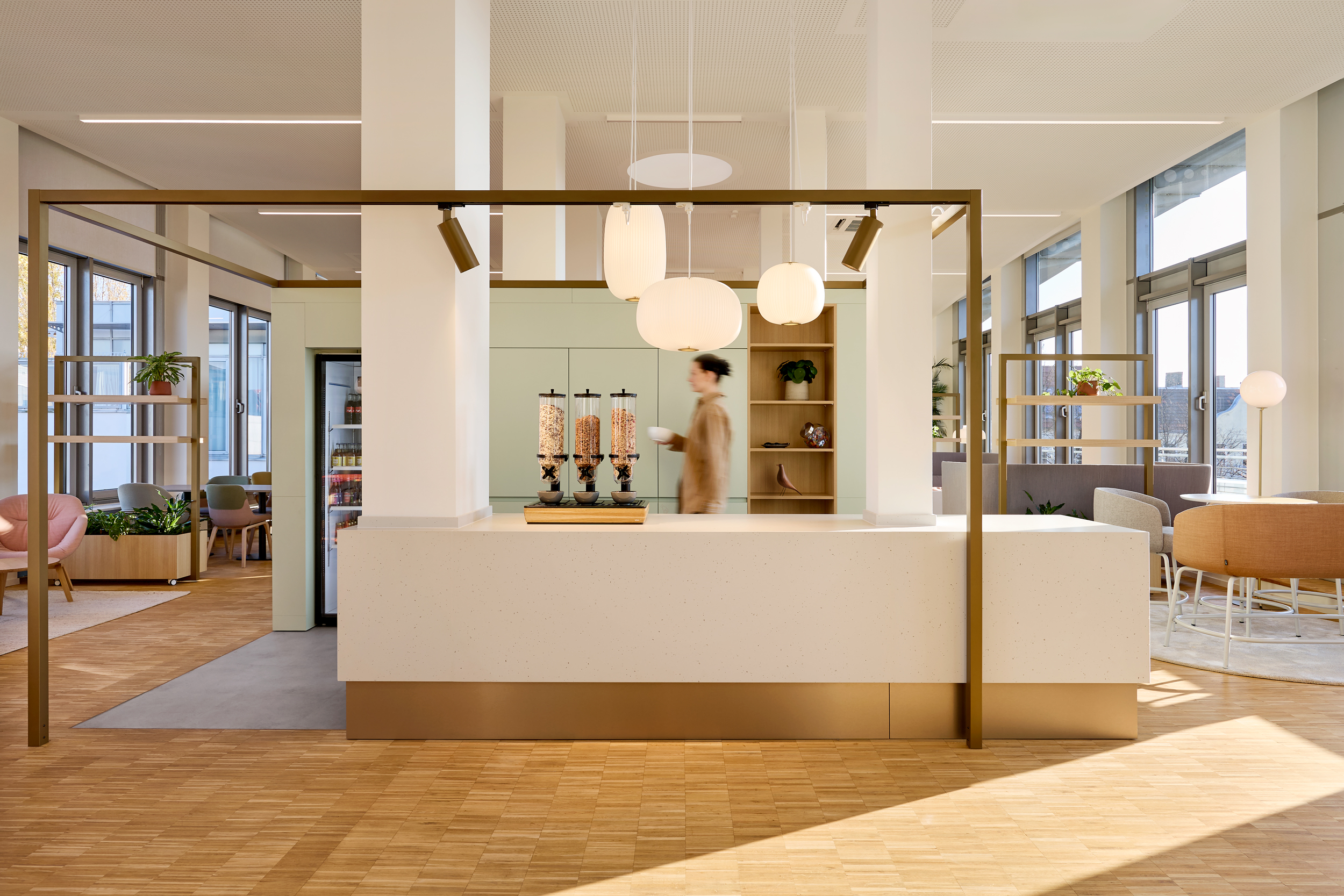
Key elements of the new headquarters are the work cafés and the so-called Flow Market. They serve as communication hubs in everyday office life, combining work, relaxation, and interaction. The Flow Market on the fourth floor has been deliberately relocated: whereas previously a narrow event area competed with meeting rooms, there is now a spacious, independent area for events, informal meetings, and team formats. Even the table football is not just a game, but a tool for interaction and discussion.
The reception area has also been radically reimagined. Previously shielded by fire doors, it now opens up transparently to the building: a generous glass wall makes the reception visible from the main entrance, accompanied by a completely modernized access control system. The first impression thus becomes an expression of an open, contemporary corporate culture.
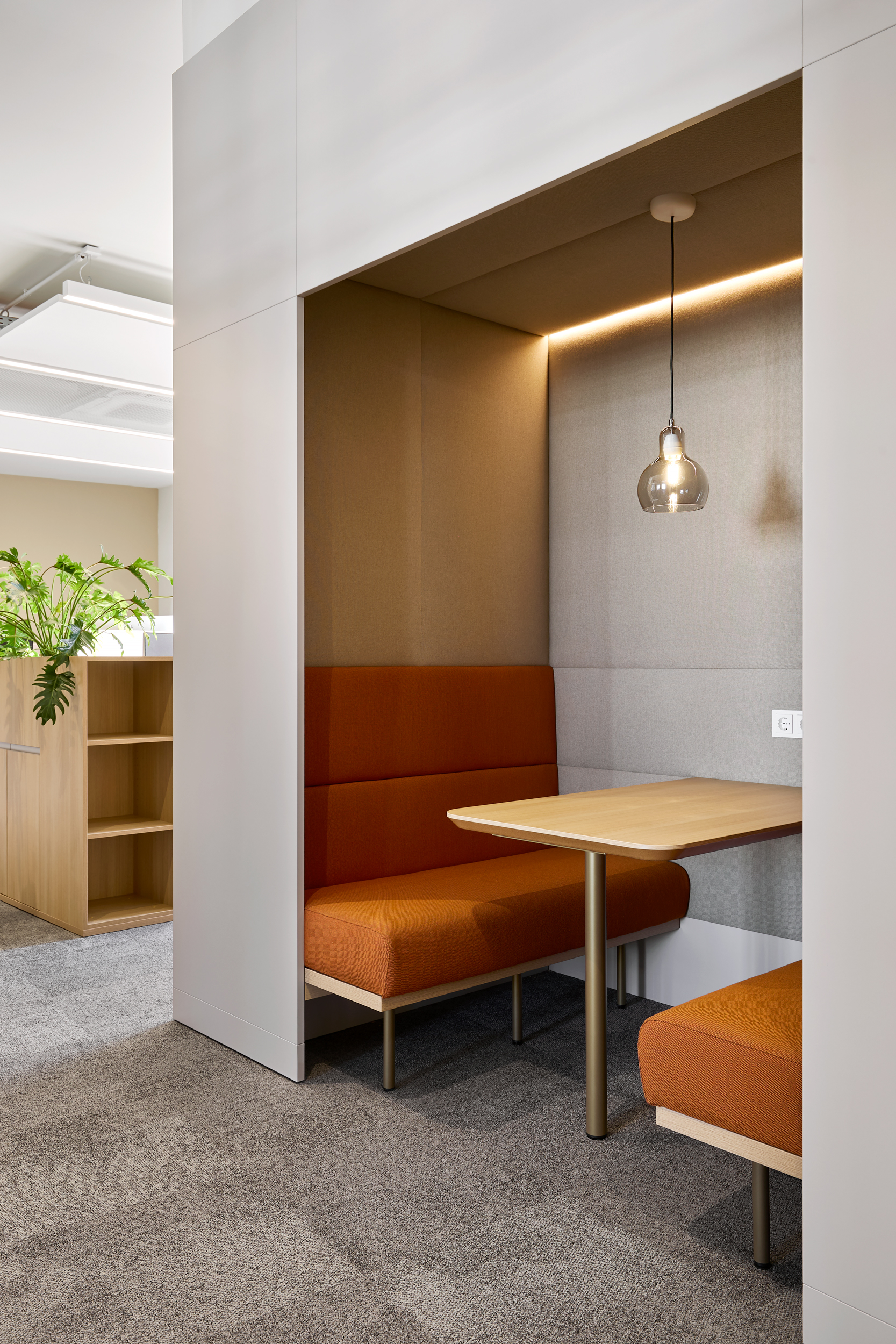
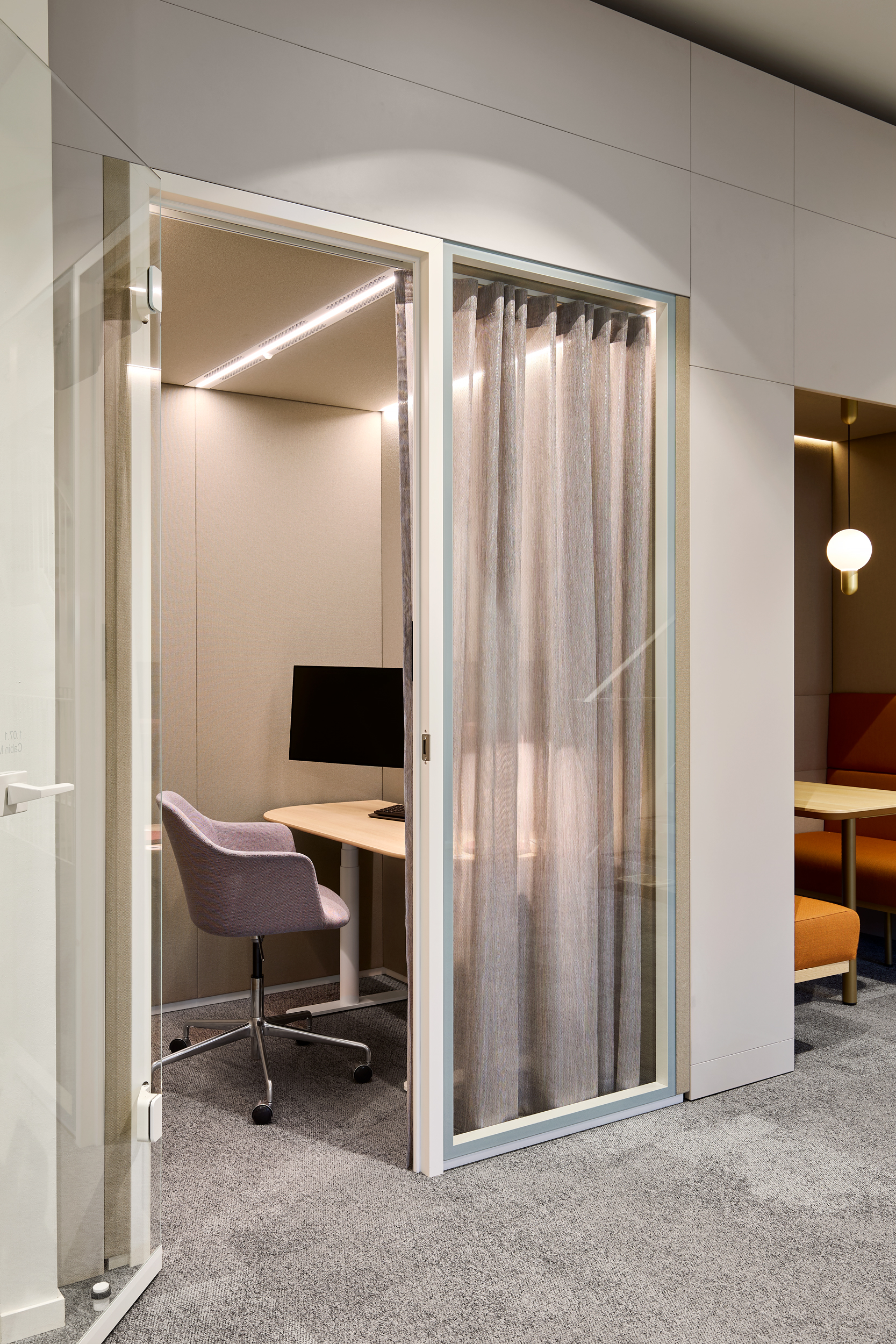
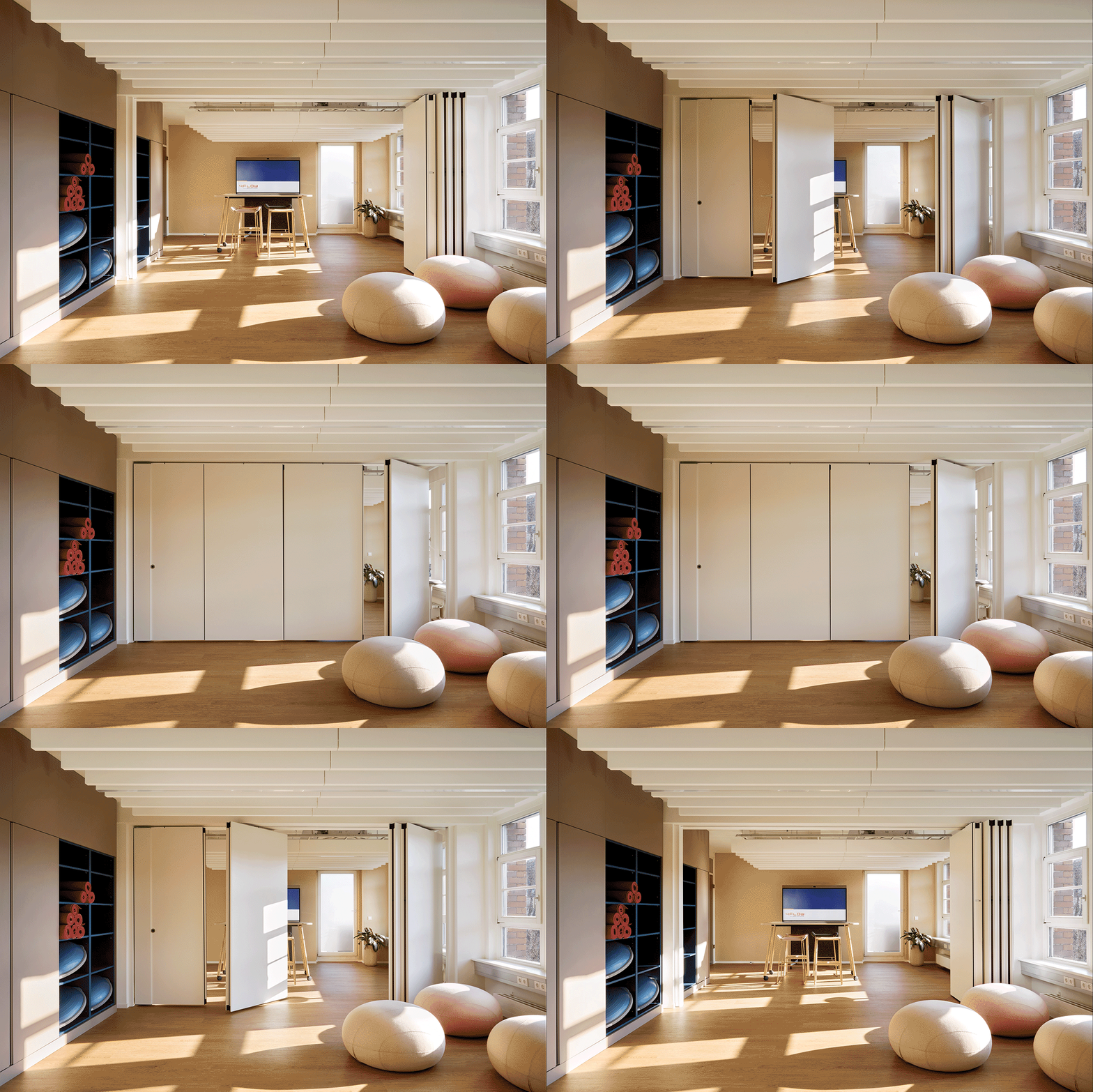
Frame structures, open shelving systems, curtains for flexible zoning, and room-in-room solutions in the form of cabins characterize the design. They create orientation, transparency, and adaptability without losing the openness of the spaces. Materials, colors, and surfaces combine functionality with atmosphere and ensure a balance between professionalism and quality of stay.
The new 4flow headquarters demonstrates how existing office spaces can be transformed into vibrant working environments through strategic planning and precise design. It is a place that reflects, supports and enhances the company’s culture in everyday working life.
Client
4flow SE
Location
Berlin
Completion
2025
Project team
Susanne Brandherm, Andreas Jacob, Livia Chan, Janina Jäkel, Valeria Vysozki
Photos
Maike Piorr
Sustainability aspects
Man in space
Flexible Raumzonen und individuelle Sitzmöglichkeiten für unterschiedliche Bedürfnisse sorgen für Wohlbefinden der Nutzenden
Room quality
Flexible Raumstruktur mit Maßnahmen zur Optimierung der Raumakustik, Erweiterung der Raumhöhe, individuelles Lichtkonzept
Materialwahl
Hochwertige Materialien, gewebte Textilien, Bodenbelag mit hohem Recyclinganteil, Beleuchtung aus dem Niedrigenergiesektor
Mehrwert für Mitarbeitende
Planungsprozess in offenem Austausch mit der Belegschaft, Neugestaltung nach den Bedürfnissen und Wünschen der Mitarbeitenden, Gestaltungsqualität mit Identifikationsmöglichkeiten
Floor plan